
 By
Picture a man in his fifties who keeps a roll of antacid tablets in his desk drawer at work. Another sits in the glove box of his car, and a third in the pocket of his favourite jacket. He has had heartburn on and off for years. It flares after a late dinner or a spicy lunch, he chews a tablet, and it fades. He would not call it a problem. It is simply part of his day, like checking his phone.
What is strange about this habit is not the heartburn itself, which is common. It is how long people will manage a symptom rather than look at it. The examination that could show what is going on often takes about ten to fifteen minutes, under sedation. If you have been wondering about gastroscopy in Singapore, the real question is often not whether the test is unpleasant, but how long you have been quietly working around a symptom that deserves a proper look.
Table of Contents
What a gastroscopy actually is
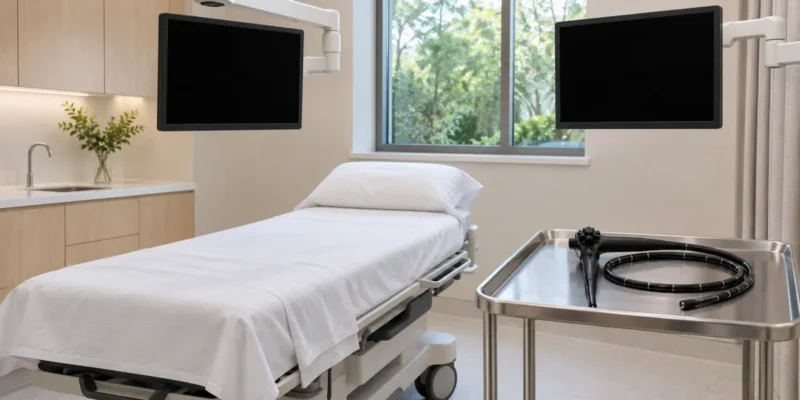
A gastroscopy lets a doctor look directly at the lining of your upper digestive tract. A thin, flexible tube with a small camera at its tip, called an endoscope, is passed gently through the mouth and down into the oesophagus, the stomach and the duodenum, which is the first part of the small intestine.
Because the doctor can see the lining directly, they can do more than look. Small tissue samples, called biopsies, can be taken for testing, and some problems, such as certain types of bleeding or polyps, can be treated during the same procedure.
The symptoms that deserve a closer look
Most stomach upsets pass on their own. The ones worth discussing with a doctor are those that linger or carry warning signs. A gastroscopy may be recommended if you have:
- Heartburn or reflux that is frequent, severe or does not settle with medication.
- Upper abdominal pain that has not resolved with over-the-counter treatment.
- Difficulty swallowing, or a feeling that food is getting stuck.
- Ongoing nausea, vomiting or bloating without a clear cause.
- Vomiting blood, or passing dark, tarry stools.
The last two signs need prompt medical attention. The others are easy to live with, which is exactly why they are so often left too long.
The fear is usually bigger than the test
Many people delay because they imagine gagging on a tube while fully awake. In practice, sedation is usually given through a vein to help you relax, and a local anaesthetic spray may be used to numb the throat.
You will need to fast for around six to eight hours beforehand, so your stomach is empty and the view is clear. The examination itself usually takes ten to fifteen minutes, although you will spend longer at the clinic for preparation and recovery. Afterwards, a mild sore throat and some bloating from the air used during the procedure are common, and they usually settle within a day or two.
Gastroscopy as a screening tool
Gastroscopy is not only for people with symptoms. It is also the standard screening tool for stomach cancer, because it allows suspicious areas to be seen and sampled directly. Detecting stomach cancer at an early stage generally offers better treatment outcomes, and some early cancers can even be removed during an endoscopy.
It is worth discussing screening with your doctor if you have a close family member who has had stomach cancer, a current or previous infection with a bacterium called H. pylori, ongoing inflammation of the stomach lining, or upper digestive symptoms that have never been investigated.
Planning the day and the cost
Because of the sedation, you should not drive or operate machinery for the rest of the day, so arrange for someone to take you home. Most people can eat normally and return to light activities later the same day once any grogginess has passed.
Costs vary with several factors, including whether a biopsy or polyp removal is needed, the type of sedation used, the kind of facility and how complex the case is. In Singapore, several gastroscopy procedures are listed in the Ministry of Health’s Table of Surgical Procedures, which means MediSave may be used to offset part of the cost, subject to withdrawal limits. Check your insurance coverage before your appointment.
Understanding the small risks
Gastroscopy is generally safe, and serious complications are rare. Mild bleeding can occur, mostly when a biopsy or polyp removal is performed. Infection is uncommon for diagnostic procedures, and reactions to sedation are unusual and closely monitored throughout.
These risks are worth weighing honestly against the alternative, which is often years of guessing about a symptom that has never been examined.
The man with antacids in every pocket is not careless. He is simply used to managing rather than asking. If you recognise yourself in him, consider that the answer might be a short examination and a single day off work away. A quick look can bring either reassurance or early treatment, and both are worth far more than another roll of tablets.
Comments